Why data center fire safety and security must become a strategic priority
These facilities are no longer simply technical buildings filled with servers. They have become the backbone of Europe’s digital economy and a cornerstone of its technological sovereignty. Their uninterrupted operation underpins everything from hospital systems and banking networks to transport infrastructure, public services and industrial automation.
As their importance grows, so do the risks they face. Fire, physical intrusion, sabotage, power failures and system disruptions are no longer isolated technical incidents. They are systemic threats to business continuity, economic stability and public safety. In a digital society, the resilience of data centers is a matter of strategic importance.
Data centers as critical infrastructure
Across Europe, thousands of data centers now support essential services that citizens and businesses depend on every day. A single large-scale outage can disrupt entire regions, affect millions of people and cause economic damage measured in billions of euros.
At the same time, the data center sector is evolving at extraordinary speed. Hyperscale facilities, edge computing, AI clusters and high-density server environments have fundamentally changed the operational and risk profile of digital infrastructure. Many facilities were not originally designed for today’s power loads, energy architectures and continuous uptime requirements.
In this new reality, fire safety and physical security are no longer just facility management concerns. They are national resilience issues.
A new generation of fire risk
Modern data centers face fire risks that barely existed a decade ago. Ultra-high power densities, complex electrical systems, lithium-ion battery installations, advanced cooling technologies and modular infrastructure all introduce new potential ignition sources and new failure modes.
When a fire starts in a data center environment, escalation can be extremely rapid. Downtime is measured in seconds, and the financial, operational and reputational consequences can be severe. At the same time, traditional fire protection approaches are often poorly suited to mission-critical digital environments. Water-based suppression, delayed detection or poorly integrated systems can cause as much damage as the fire itself.
Today’s data centers require intelligent, fast-acting and non-disruptive fire protection solutions that are fully integrated into building and infrastructure management systems. Fire safety must evolve at the same pace as the digital infrastructure.
"In a digital society, the resilience of data centers is a matter of strategic importance."
Physical security in a hybrid threat landscape
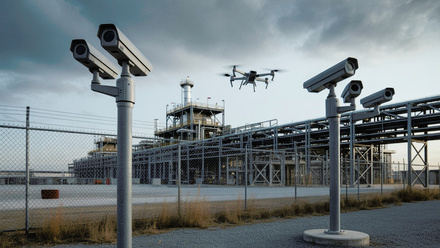
While cyber security dominates public debate, physical security remains a fundamental vulnerability. Data centers are high-value strategic assets and increasingly attractive targets for criminal activity, espionage, sabotage, insider threats and hybrid physical-cyber attacks.
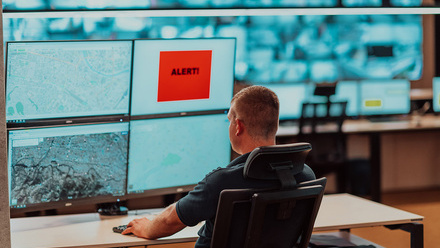
A physical breach can compromise sensitive data, disrupt essential services and undermine public trust in digital systems. Modern data center security therefore must move far beyond fences and cameras. It must be based on layered protection, intelligent monitoring, real-time analytics and full integration with cyber security operations.
In a world of converging digital and physical threats, security must be designed as a unified ecosystem.
Sustainability and safety must advance together
Europe’s commitment to climate neutrality is reshaping the data center sector. Operators are investing heavily in renewable energy integration, battery storage, alternative cooling technologies, heat reuse and highly efficient power architectures.
These innovations are essential for meeting Europe’s climate goals, but they also introduce new safety challenges. Energy storage systems, high-voltage infrastructure and alternative cooling media all create new fire risk scenarios if not properly managed.
A green data center that is not fire-safe is not sustainable. Safety must be embedded into sustainability from the very beginning.
The challenge of fragmented regulation
Despite the cross-border nature of digital infrastructure, Europe’s regulatory landscape remains fragmented. Fire safety standards, security requirements, certification schemes and risk methodologies still vary widely between countries.
This fragmentation creates uncertainty for operators and investors, leads to uneven protection levels and increases operational complexity and cost. In a digital single market, safety frameworks should not stop at national borders.
Europe needs a more harmonised approach that aligns standards, promotes best practices and supports innovation while ensuring consistently high levels of protection across all member states.
Why Europe needs a unified voice
The scale, complexity and strategic importance of modern data centers demand a coordinated European response. Industry, regulators, insurers, emergency services, technology providers and policymakers must work together to build future-ready safety frameworks.
This is where Euralarm plays a vital role. As the European association representing the fire safety and security industry, Euralarm brings together expertise from across the continent. It connects manufacturers, system integrators, installers, authorities and end users into a collaborative platform. It provides the technical knowledge, regulatory insight and industry coordination needed to support resilient digital infrastructure. Euralarm is uniquely positioned to be the voice of Europe on data center fire safety and security - shaping policy, driving technical excellence and promoting resilience by design.
Protecting Europe’s digital future
Europe’s digital ambitions depend on data centers that are not only powerful, efficient and scalable, but also safe, secure and resilient. Fire safety and physical security are no longer secondary considerations. They are strategic enablers of Europe’s digital economy. Protecting data centers means protecting economic stability, public services, national security, technological sovereignty and citizen trust.